Modern vs. Old Washers and Dryers: Real Energy and Water Savings for SoCal Homes
Appliance technology has improved dramatically over the past 15 years. If your washer or dryer is a 2008–2012 model, you may be paying significantly more than necessary — in electricity, in water, and in wear on your clothes. Here’s the real-world comparison for Orange County households.
Washing Machines: The Generation Gap
Old Top-Load Agitator Washers (Pre-2010)
The classic top-loader with a center agitator uses 40–45 gallons of water per load and roughly 500 kWh per year for an average household. These machines were simple and durable — but they’re water and energy hogs by today’s standards.
Modern High-Efficiency Top-Load Washers
Modern HE top-loaders (no agitator or with an impeller-style plate) use 13–20 gallons per load — less than half the water. Annual energy use drops to 100–150 kWh. That’s a 70–80% reduction in water consumption and significant electricity savings.
Modern Front-Load HE Washers
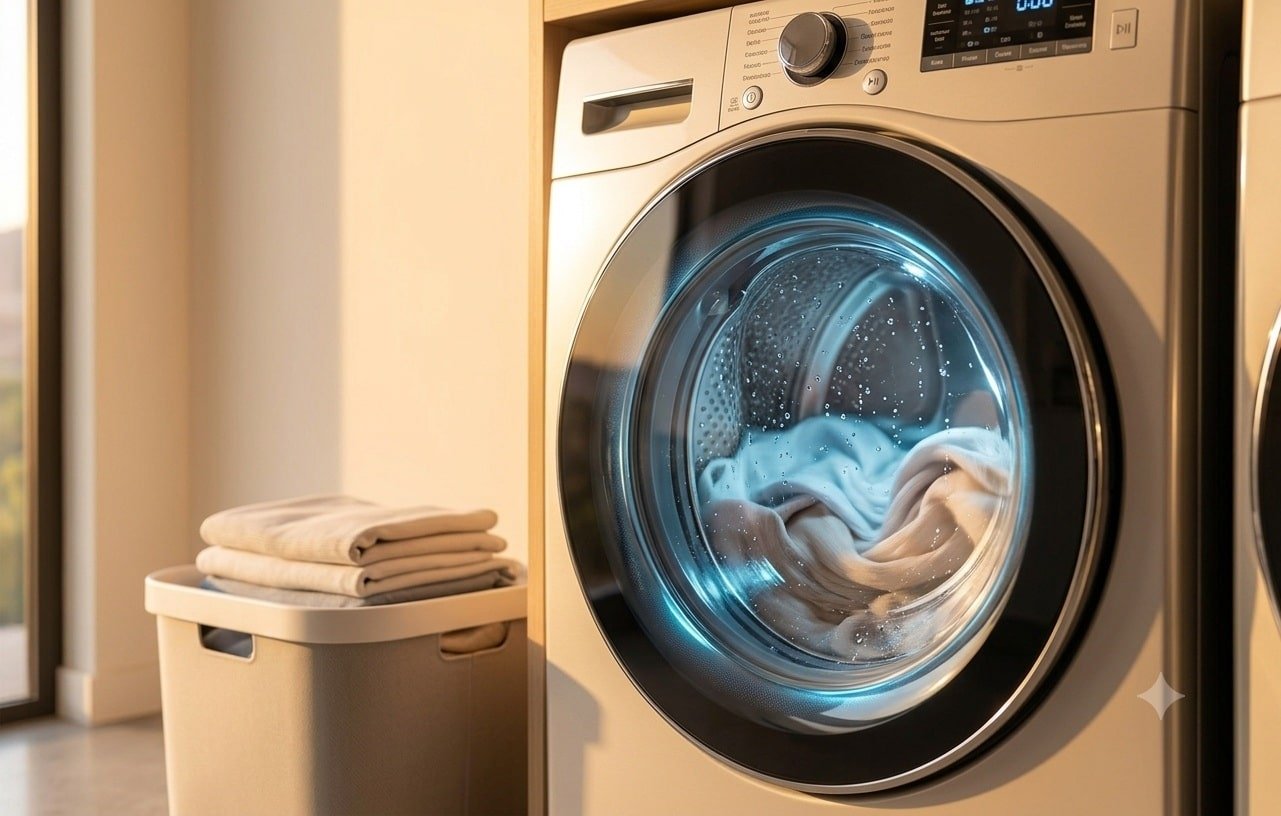
The gold standard for efficiency. Front-loaders use 10–15 gallons per load and under 100 kWh per year. They also extract more water during the spin cycle, which means your dryer runs fewer minutes per load — a secondary energy saving that’s easy to overlook.
Annual Savings for an OC Household (4–5 loads/week)
Switching from a 2005 top-load agitator to a modern front-load HE washer saves approximately: – Water: 10,000–12,000 gallons per year — meaningful in drought-impacted SoCal – Electricity: $60–$90/year at SoCalEdison rates – Water bill: $30–$50/year depending on your local water rate
Dryers: Where the Real Efficiency Revolution Is Happening
Standard Electric Resistance Dryers
The most common dryer type in the US uses a large electric heating element. Energy use: 700–800 kWh per year for average household use. At SoCal rates, that’s $200–$280/year.
Heat Pump Dryers — The Game Changer
Heat pump dryers (available from LG, Samsung, Bosch, Miele, GE Profile) work fundamentally differently: they recirculate and dehumidify warm air rather than venting hot air outside. Annual energy use drops to 350–450 kWh — a 40–50% reduction worth $100–$150/year in electricity savings at OC rates.
Additional benefits: no exterior venting required (ideal for condo and apartment installs), gentler on fabrics (lower heat), and dramatically reduced fire risk (no lint-clogged vent duct required).
Gas Dryers in SoCal
Natural gas dryers are popular given historically lower gas costs. A modern gas dryer uses about 0.22 therms per cycle and remains cost-competitive. However, SoCalGas rates have been rising — heat pump electric dryers are increasingly competitive on total operating cost, especially when combined with solar or off-peak TOU electricity rates.
The Water-Energy Connection in California
Southern California imports much of its water supply via the State Water Project and Colorado River aqueduct — and pumping that water over mountains consumes enormous electricity. Every gallon saved by a modern HE washer represents not just water cost savings but embedded energy savings as well. This is why California’s water efficiency standards for appliances are among the strictest in the nation.
Is Upgrading Worth It Right Now?
The financial case depends on a few factors:
- Age of your current machine — a 5-year-old washer in good condition probably doesn’t warrant replacement purely for efficiency. A 15-year-old machine is a very different calculation.
- Repair costs — if your older machine needs a significant repair, that changes the math. Repair now and plan a replacement on your own timeline, or use the repair event as a trigger to upgrade.
- Available rebates — always check SoCalEdison and SoCalGas current programs before purchasing. Rebates of $50–$200 on qualifying machines are commonly available.
Frequently Asked Questions
Are front-load washers harder to maintain than top-loaders? They require slightly more attention (monthly door seal cleaning, filter checks), but nothing burdensome. With consistent monthly maintenance, front-loaders are extremely reliable and long-lasting.
My 10-year-old washer is working fine — should I replace it? No rush if it’s running well. Document its energy use with a Kill-A-Watt meter and compare to current models. When it eventually needs a significant repair, use that moment to evaluate repair vs. upgrade.
Do heat pump dryers work in hot SoCal garages? Heat pump dryers operate less efficiently in very hot ambient temperatures (above 100°F), which can be an issue in OC garages in summer. Ensure good ventilation or consider keeping the dryer inside. LG and Samsung publish their optimal operating temperature ranges in the product specs.
Washer or dryer needing repair in Orange County? OCG Appliances provides expert service on all makes and models. Visit ocgappliances.com.