How Much Are Your Old Appliances Costing You Every Month in SoCal?
Your 2008 refrigerator hums away in the corner, seemingly fine. The dryer from 2007 still gets the job done. But “working” and “efficient” are two completely different things — and in Southern California, where electricity rates are among the highest in the country, that gap costs real money every single month.
Let’s run the actual numbers.
Refrigerator: The 24/7 Energy Drain
| Model Year | Est. Annual kWh | Annual Cost at SoCal avg. $0.32/kWh |
| 2000–2005 | 600–800 kWh | $192–$256/year |
| 2010–2015 | 300–450 kWh | $96–$144/year |
| 2020–2025 | 100–200 kWh | $32–$64/year |
A 2003 refrigerator costs roughly $220/year to run in SoCal. A comparable 2024 model costs about $48/year. That’s $172/year in ongoing savings — or $2,580 over 15 years of operation.
Washing Machine: Two Bills, Not One
| Machine Type | Water/Load | Annual kWh | Annual Cost (Electric + Water) |
| Old top-load agitator (pre-2005) | 40–45 gal | ~500 kWh | ~$230/year |
| Modern HE top-load | 15–20 gal | ~150 kWh | ~$70/year |
| Modern front-load HE | 10–15 gal | ~100 kWh | ~$50/year |
Switching from a pre-2005 top-loader to a modern front-loader saves roughly $150–$180/year in combined electricity and water costs. With OC water rates continuing to rise, this number grows every year.
Dryer: The Biggest Energy Eater in the Laundry Room
| Dryer Type | Annual kWh | Annual Cost at $0.32/kWh |
| Old electric resistance (2005–2010) | 750–850 kWh | $240–$272/year |
| Modern electric resistance | 600–700 kWh | $192–$224/year |
| Modern heat pump dryer | 350–400 kWh | $112–$128/year |
The difference between an older electric dryer and a modern heat pump dryer is $120–$160/year at SoCal rates. Over 10 years: $1,200–$1,600 in electricity savings.
Dishwasher: Modest but Consistent
Older dishwashers (pre-2010) used 6–10 gallons per cycle and 1.5–2 kWh per cycle. Modern Energy Star models use 3–4 gallons and under 1 kWh. For a family running the dishwasher 6 times/week, annual savings are $25–$40 in electricity and $30–$50 in water.
The Full Household Picture
If your home has a complete set of 2003–2008 appliances (fridge, washer, dryer, dishwasher), you’re likely paying $400–$600 per year more in electricity and water than a neighbor with modern efficient appliances. Over 10 years: $4,000–$6,000 in unnecessary utility costs. That’s enough to pay for the replacements themselves.
But Repair First — Here’s the Honest Case
None of this means you should rush out and replace working appliances. The most financially and environmentally responsible path is almost always:
- Maintain your current appliances properly — dirty coils, bad door seals, and clogged vents all waste energy
- Repair when they break — if repair cost is less than 40–50% of replacement, repair wins
- Replace with efficient models when it’s time — and use available California rebates
A well-maintained 10-year-old refrigerator running on clean condenser coils and a good door seal outperforms a neglected 3-year-old model every time.
How to Check What Your Appliances Are Actually Costing
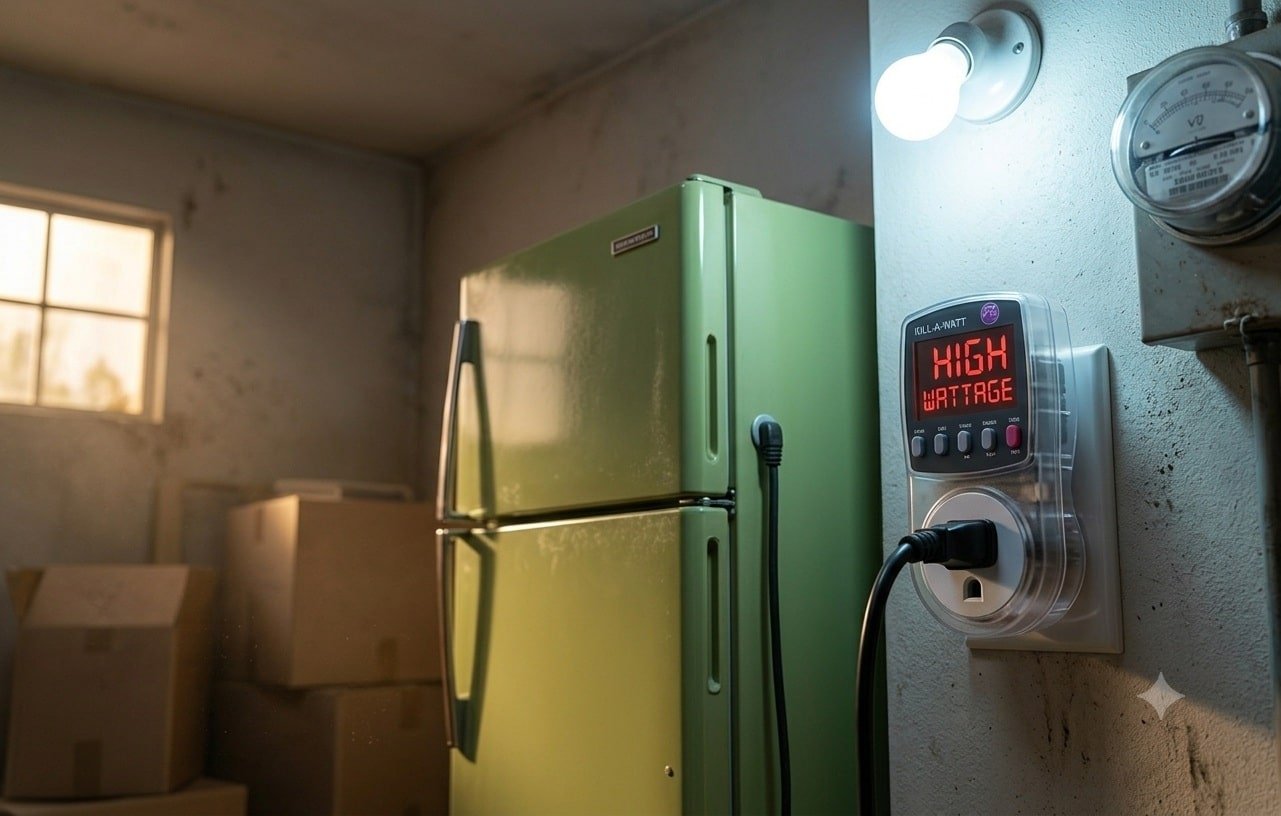
Pick up a Kill-A-Watt meter ($25–$30 at Amazon or Home Depot). Plug your refrigerator into it for 48–72 hours and get your exact kWh consumption. Multiply by your current SoCalEdison rate and annualize it. You might be surprised — or you might confirm it’s time to upgrade.
Frequently Asked Questions
At what age should I replace my refrigerator? If it’s over 15 years old and facing a major repair, replacement deserves serious consideration. If it’s well-maintained and running fine at 15 years, the environmental cost of manufacturing a new unit may outweigh the efficiency gains — especially as California’s grid gets cleaner.
Should I replace working appliances just for energy savings? Usually no — especially if they’re under 12 years old. The embodied carbon and cost of manufacturing new appliances takes years to offset through efficiency gains. Maintain, repair when needed, and replace strategically.
Appliance running inefficiently in Orange County? Sometimes a repair — cleaning coils, replacing a door seal, fixing a defrost issue — restores efficiency better than you’d expect. OCG Appliances can assess your appliance and give you straight advice. Visit ocgappliances.com.