Oven & Stove Maintenance Guide: Safety and Performance for SoCal Households
Your oven and stove run daily, handle intense heat, and deal with spills and grease constantly. A little regular maintenance keeps them performing safely for years and prevents the kinds of failures that strand you without a working kitchen. Here’s what every Southern California household should know.
Stovetop Maintenance: Gas Ranges
Keep Burner Caps and Grates Clean
Clogged burner ports are a leading cause of uneven flames, ignition problems, and the dreaded clicking-that-won’t-stop. After each use, let the grates cool and wipe down the stovetop. Weekly, remove the burner caps (the circular caps sitting on top of each burner) and soak them in warm soapy water. Use a soft brush or toothpick to clear the gas ports — the small holes around the cap’s edge — never a toothpick that might break off inside.
Keep Food Away from the Igniter Area
The spark igniter is the ceramic electrode next to each burner. When food, grease, or water enters the igniter area, you get the annoying continuous clicking even after the burner is lit. Dry the igniter area with a hairdryer on low (stove off), or let it air dry — it usually resolves within a few hours. Persistent clicking after drying means the electrode or igniter switch needs replacement.
Monitor Flame Color
Healthy gas flames are blue with a small yellow tip at most. A persistently yellow or orange flame indicates incomplete combustion — possibly from a clogged port or air-gas imbalance. This warrants a professional check.
Stovetop Maintenance: Glass-Top Electric Ranges
Never Slide Heavy Pots on Glass Cooktops
Glass-ceramic cooktops scratch and crack when dragged. Always lift cookware. Use flat-bottomed pots — cast iron is fine if lifted carefully, not dragged.
Clean Spills Immediately After Surface Cools
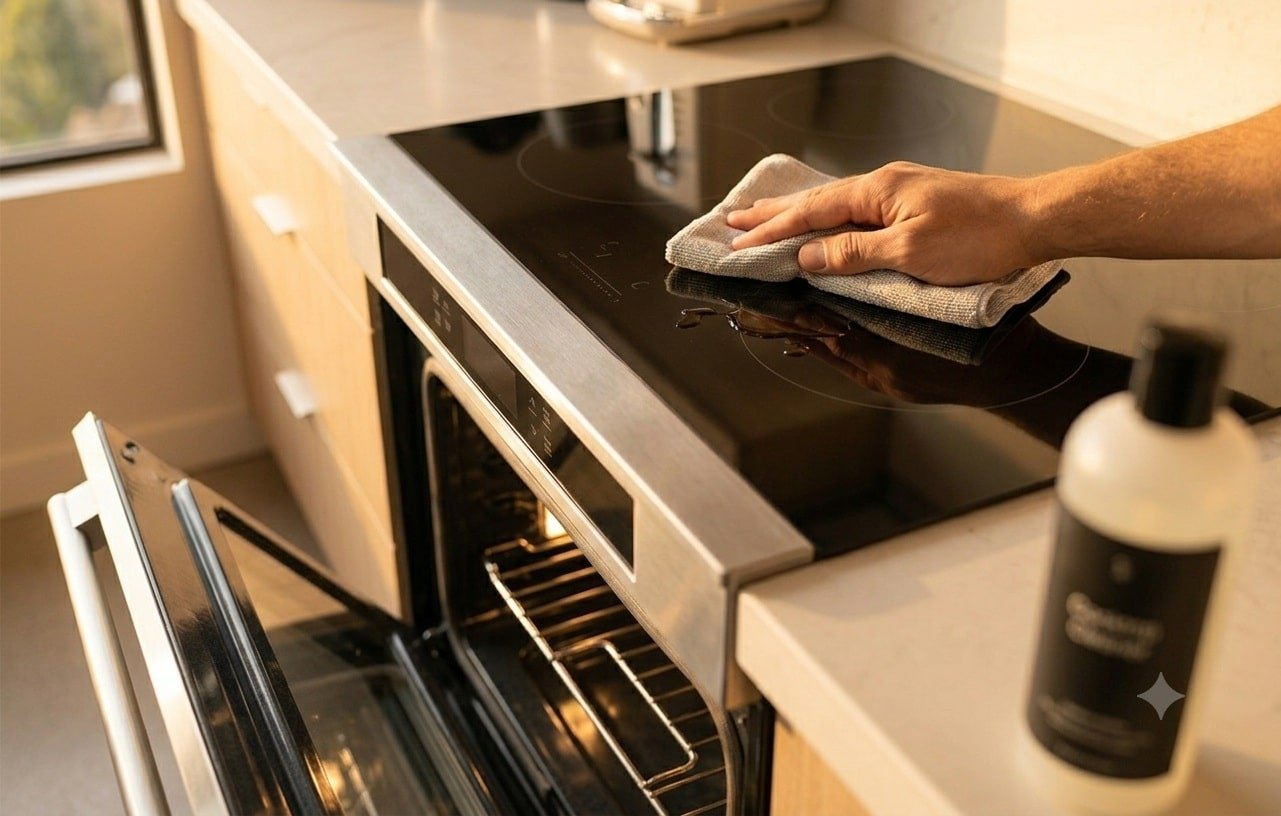
Sugar-based spills (jam, tomato sauce, canned goods) permanently bond to the glass if left to reheat. Once cool, use a ceramic cooktop scraper and dedicated cooktop cleaner. Never use abrasive pads.
Coil Element Care
On traditional coil-element stoves, periodically remove the coils and clean the drip pans. Replace cracked or damaged coil elements promptly — a damaged element can arc.
Oven Maintenance
Use Self-Clean Sparingly
Self-cleaning ovens heat to 800–900°F to incinerate residue. Effective, but stressful on the oven. Use self-clean once every 3–6 months — not after every messy meal. Before running it: remove oven racks (the extreme heat warps and discolors them), wipe out large debris manually, and ensure good kitchen ventilation. Don’t leave the house during a self-clean cycle.
Check the Door Gasket
The gasket around the oven door opening prevents heat from escaping during cooking. If it’s torn, cracked, or pulling away from the door, heat escapes — your oven cooks unevenly, takes longer to reach temperature, and uses more energy. Gaskets are inexpensive and worth replacing promptly.
Verify Temperature Accuracy
If baked goods consistently come out under- or over-done despite following recipes exactly, your oven’s temperature calibration may be off. Pick up an oven thermometer ($8–$12 at Target or Home Depot) and test. Many ovens run 25–50°F off their displayed temperature. Most digital ovens allow recalibration through the settings menu — check your manual.
Gas Range Ventilation: A SoCal Priority
Modern SoCal homes are tightly sealed for energy efficiency — which means gas combustion byproducts need proper ventilation. Always use your range hood when cooking with gas. Without a range hood, open a window. Keep your kitchen CO detector functional and replace batteries annually. This is non-negotiable for gas appliances in well-insulated Southern California homes.
Frequently Asked Questions
How often should I deep-clean my oven? Self-clean or manual deep-clean every 3–6 months depending on how much you cook. Regular light cleaning after each messy use dramatically reduces the need for full deep-cleaning sessions.
My gas burner won’t stay lit at low settings — what’s wrong? A burner that extinguishes itself at low heat could be a thermocouple, gas valve, or calibration issue. Low-flame problems are a safety concern — call a technician rather than adjusting gas components yourself.
Can I line my oven with aluminum foil to catch drips? Don’t line the oven floor — it blocks airflow and can damage the heating element or the oven floor finish. Use an oven-safe drip pan on the rack below instead.
Stove or oven problems in Orange County? OCG Appliances is your local repair specialist. Book at ocgappliances.com.